Director : Steve Hudson
Screenplay : Steve Hudson
Starring : Asa Butterfield, Joel Fry, Rob Brydon, Tia Bannon
Running Time : 89 minutes

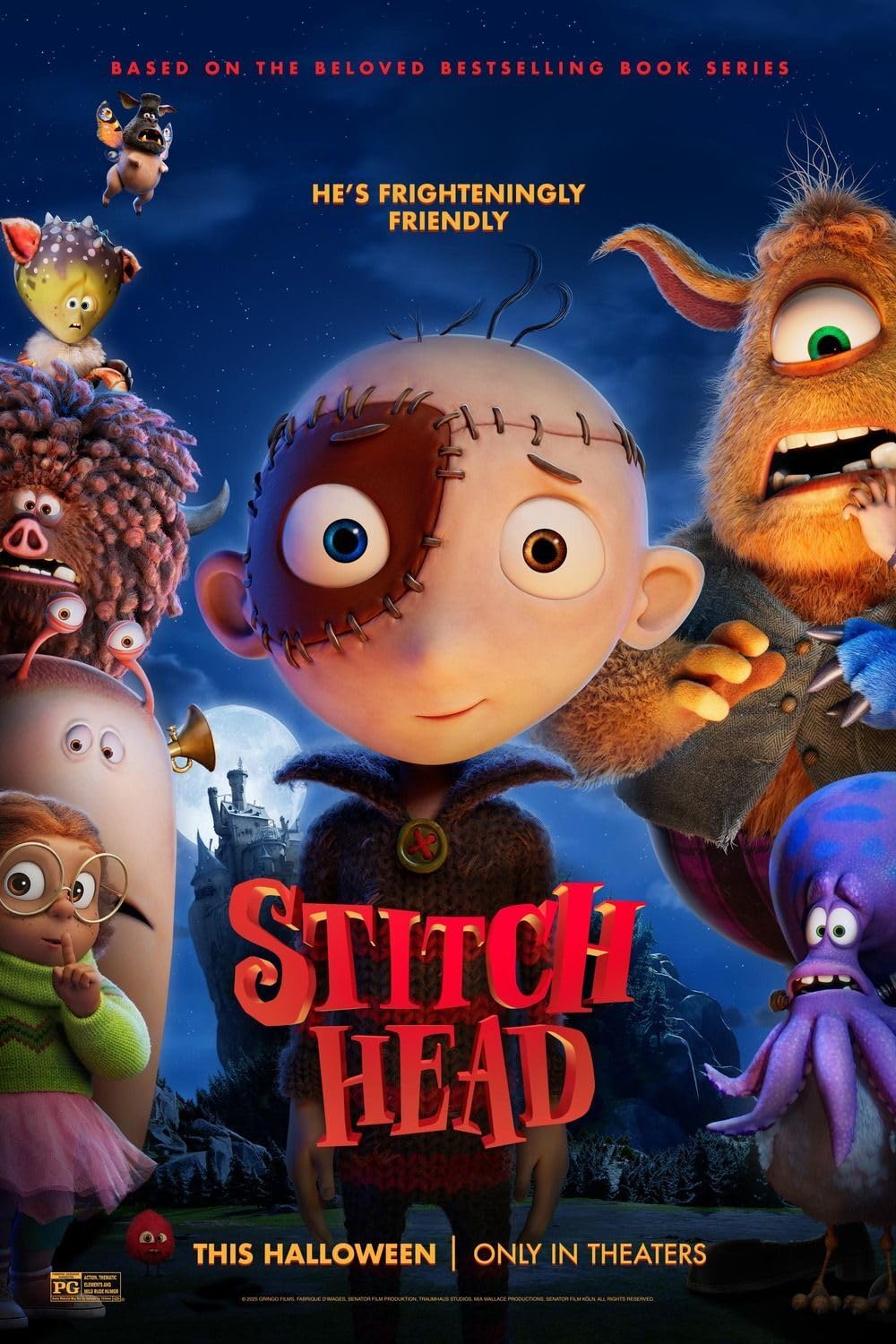
“Stitch Head” is an animated fantasy comedy that blends the charm of classic monster tales with the warmth of friendship and identity. Directed and written by Steve Hudson, this 2025 feature brings to life Guy Bass’s beloved 2011 graphic novel, transforming it into a visually striking and emotionally resonant film. The story centers on Stitch Head, the first creation of a mad scientist living in the mysterious Castle Grotteskew, who has long been forgotten by his master as new creatures come to life.
Within the eerie yet whimsical halls of the castle, Stitch Head lives a quiet existence, acting as a mentor and caretaker for the new monsters his creator continuously assembles. His stitched-together appearance hides a heart filled with loyalty and longing. When a flamboyant circus ringmaster named Freakfinder visits the nearby city, Stitch Head is lured by the promise of recognition and belonging, prompting him to leave the only home he’s ever known. His adventure leads him to discover not only the outside world but also the value of his own identity and the family he left behind.
Steve Hudson infuses the film with a gentle humor and heartfelt sincerity. His direction balances gothic imagery with lighthearted storytelling, creating an atmosphere reminiscent of Tim Burton’s early works while maintaining a distinctly European sensibility. The film captures the spirit of dark whimsy through carefully crafted animation and a narrative that appeals to both children and adults. Hudson’s adaptation remains faithful to Guy Bass’s original tone while expanding the emotional depth of the story, transforming it into a cinematic experience that celebrates difference and empathy.
Asa Butterfield brings a subtle, emotional nuance to the voice of Stitch Head. His performance captures the character’s quiet melancholy and sense of wonder, making him both endearing and relatable. Joel Fry lends warmth and humor as the Creature, while Rob Brydon embodies the eccentricity and charisma of the scientist with effortless charm. Tia Bannon, voicing Arabella, adds balance to the ensemble with her compassion and courage, grounding the film’s emotional arcs. Together, the cast gives life to a group of characters that feel both fantastical and deeply human.
The film’s world-building is one of its greatest strengths. Every corner of Castle Grotteskew is alive with texture and imagination. The creative team behind the animation, including Aniventure, Traumhaus Studios, and Fabrique d’Images, builds an environment rich with visual detail. The muted color palette of the castle contrasts beautifully with the vibrant energy of Freakfinder’s circus, symbolizing the tension between comfort and curiosity. The character designs echo classic monster aesthetics but with modern stylization that allows expressiveness and personality to shine through.
Nick Urata’s score complements the film’s visual storytelling perfectly. His compositions weave playfulness and poignancy together, following Stitch Head’s emotional journey from isolation to acceptance. The music enhances the narrative without overpowering it, creating a rhythm that feels organic to the world onscreen. Each theme is distinct and memorable, guiding the audience through the shifting tones of the story—from the eerie quiet of the castle to the carnival chaos of Freakfinder’s traveling show.
The heart of “Stitch Head” lies in its exploration of belonging and self-worth. Stitch Head’s journey is not about grand heroism but about self-discovery. His desire to be seen and valued mirrors a universal longing for acknowledgment. The film uses the metaphor of creation to explore the relationship between maker and creation, suggesting that recognition often comes not from external validation but from self-understanding. These emotional undercurrents elevate the story beyond its fantasy setting, giving it depth that resonates across ages.
The writing balances wit and tenderness. Hudson’s dialogue sparkles with wordplay while maintaining sincerity. The humor often arises from character dynamics rather than situational absurdity, allowing for genuine warmth amid the oddities. Stitch Head’s interactions with the newer monsters, full of innocence and clumsy affection, serve as the emotional backbone of the film. Through these relationships, the narrative gently conveys lessons about kindness, loyalty, and the courage to embrace one’s flaws.
The pacing feels brisk yet thoughtful, allowing space for reflection without losing momentum. Each act flows naturally into the next, guided by Stitch Head’s internal transformation. The film opens with melancholy stillness but gradually expands into a vibrant adventure, mirroring the protagonist’s expanding world view. By the time Stitch Head confronts Freakfinder and returns to his companions, the audience feels the weight of his growth. The resolution is not grandiose, but heartfelt—a return to community and understanding.
Dieter Riepenhausen’s editing ensures a seamless rhythm between emotional beats and comedic timing. Scenes of action and introspection alternate gracefully, preventing fatigue while sustaining emotional engagement. The visual transitions, especially between the shadowy interiors of Grotteskew and the colorful chaos of the circus, are handled with precision, giving the film a dynamic yet cohesive flow.
Hudson’s direction showcases his deep affection for the genre. He draws inspiration from the aesthetics of stop-motion and gothic illustration while embracing modern digital fluidity. The film’s tone, both playful and melancholic, invites comparison to stories like “Frankenweenie” and “ParaNorman,” but it stands apart in its gentle optimism. The monsters of Castle Grotteskew are not frightening but misunderstood, each designed with endearing imperfections that reflect human vulnerability.

The moral core of the film centers on empathy and acceptance. When Freakfinder deceives Stitch Head into believing fame and admiration await him, the narrative highlights the dangers of external validation. Through his experiences, Stitch Head learns that self-worth does not come from spectacle but from connection. His eventual reconciliation with the other creatures underscores the theme of unity in diversity, suggesting that even the most unconventional beings have intrinsic value.
Cinematically, “Stitch Head” benefits from its multinational production. The collaboration between German, British, and Luxembourgish studios infuses the film with a balance of European artistry and universal storytelling. The animation maintains a painterly quality, with attention to texture, lighting, and mood. The visual contrast between the somber grays of Grotteskew and the garish colors of the circus mirrors the emotional dichotomy between safety and adventure.
Hudson’s screenplay maintains emotional clarity without resorting to sentimentality. The humor remains sharp, and the emotional stakes feel grounded. When Stitch Head realizes Freakfinder’s deceit and witnesses the chaos unleashed upon the castle, the tension feels earned. The climactic scenes—where monsters and humans confront misunderstanding together—carry genuine emotional weight. Through collaboration and honesty, the characters restore harmony, leaving viewers with a sense of closure and gentle hope.
Critical reception has highlighted the film’s charm and craftsmanship. Reviewers praised its “offbeat humor and quirky character design,” calling it a fresh yet nostalgic entry into modern animation. Asa Butterfield’s performance, in particular, has been commended for its subtle emotional depth. Some critics noted that the film does not revolutionize the genre, but its sincerity and creativity make it stand out in a crowded landscape of animated releases.
Thematically, “Stitch Head” also explores the idea of legacy. The relationship between creator and creation parallels artistic expression itself. The mad scientist, though distant and flawed, embodies the tendency to neglect one’s early work in pursuit of novelty. Stitch Head’s enduring loyalty reminds audiences that even forgotten creations have meaning and that compassion can transcend neglect. This metaphor extends beyond fiction, touching upon universal human experiences of abandonment and reconciliation.
The humor in the film carries a distinctively British sensibility—dry, clever, and understated. Moments of absurdity are balanced with heartfelt sincerity, preventing the story from becoming overly sentimental. The creatures’ interactions often elicit laughter through timing and visual irony, not through exaggeration. This balance maintains the emotional authenticity that defines the film’s tone.
“Stitch Head” achieves a rare harmony between light entertainment and thoughtful storytelling. Younger audiences will be captivated by its playful visuals and lively characters, while adults will find depth in its underlying message about identity and purpose. The film’s accessibility ensures that its emotional and thematic richness resonates across generations.
The voice performances further enhance this resonance. Rob Brydon’s portrayal of the eccentric scientist infuses the narrative with humor and unpredictability, while Joel Fry’s Creature adds heart and levity. Their chemistry contributes to the film’s rhythm, creating moments of laughter amid introspection. Tia Bannon’s portrayal of Arabella embodies compassion and serves as an emotional anchor, reminding Stitch Head—and the audience—of the importance of connection and empathy.
From a production standpoint, the film represents a triumph of collaboration. The animation pipeline extended across studios in Germany, Luxembourg, and India, each contributing distinct expertise to the final product. The craftsmanship is evident in every frame, from the detailed lighting of Grotteskew’s corridors to the fluid choreography of the circus sequences. The aesthetic consistency reflects careful supervision and artistic cohesion across teams.
Nick Urata’s music, with its blend of orchestral motifs and whimsical undertones, amplifies the sense of adventure and discovery. The soundtrack accompanies each emotional beat with sensitivity, enhancing the narrative’s progression without dictating it. His compositions encapsulate both the gothic charm and the playful energy that define the film’s atmosphere.
“Stitch Head” ultimately celebrates imperfection. Every character, from the stitched-together protagonist to the eccentric monsters and misguided humans, embodies flaws that make them endearing. The film suggests that these imperfections form the essence of individuality and connection. Rather than seeking perfection, it urges viewers to embrace their own peculiarities and to recognize beauty in difference.
The story’s resolution, where monsters and humans reconcile through understanding, underscores this philosophy. The inhabitants of Grubber Nubbin, once fearful and misled, come to see the monsters as neighbors rather than threats. Through shared empathy, the film closes on a note of harmony and quiet triumph, leaving a lasting impression of warmth and acceptance.
Visually stunning, emotionally rich, and filled with imaginative charm, “Stitch Head” stands as one of the most endearing animated films of 2025. Steve Hudson’s adaptation honors the spirit of Guy Bass’s original work while enriching it with cinematic depth. Its seamless fusion of humor, heart, and artistry demonstrates how storytelling can transcend genre to speak to something profoundly human.
The film reminds viewers that even in a world full of monsters—real or imagined—compassion and courage can stitch together the fragments of belonging. Each frame glows with creativity and care, inviting audiences to find beauty in the bizarre and hope in the forgotten corners of the world.