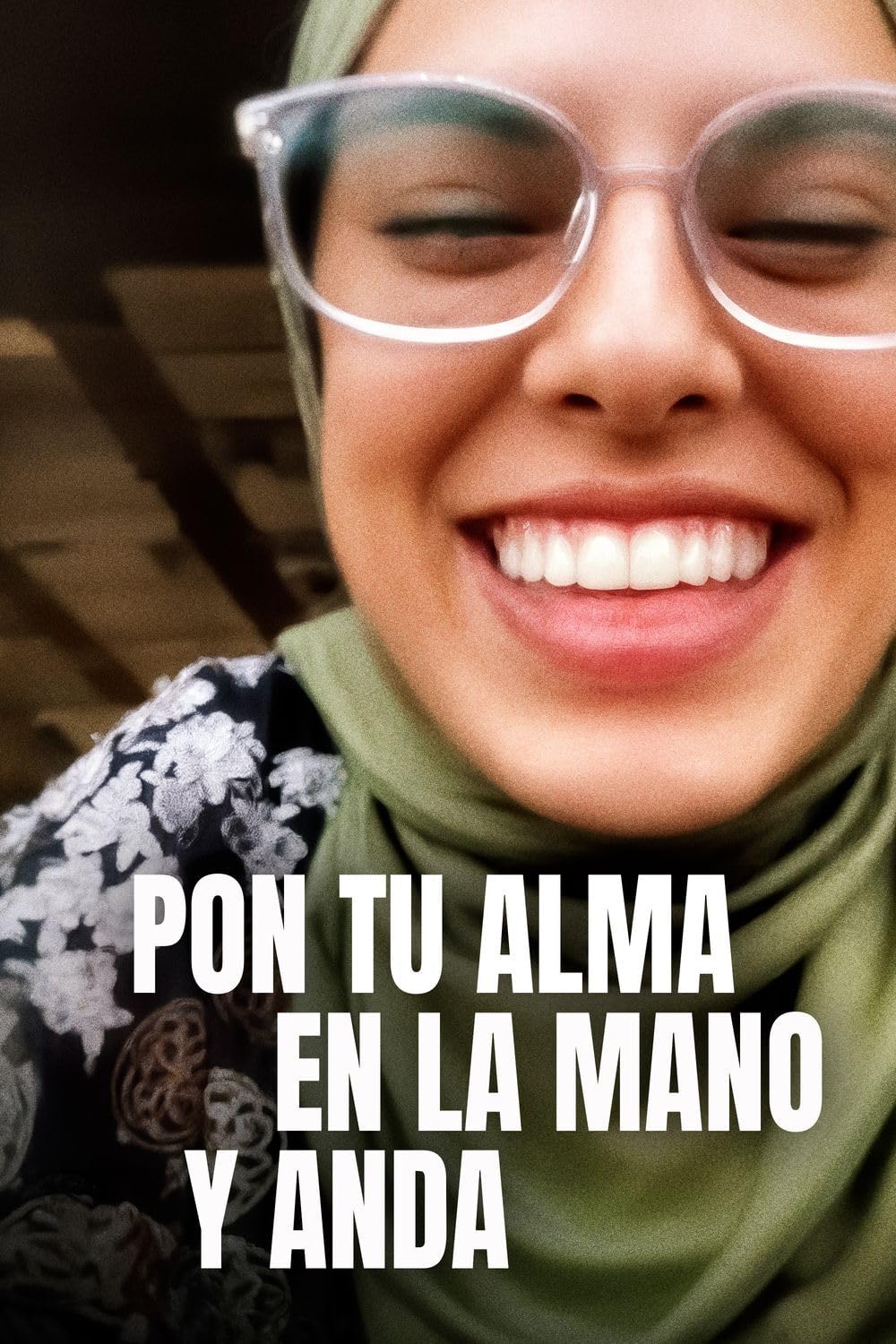
Director : Sepideh Farsi
Writer : Sepideh Farsi
Cast : Sepideh Farsi, Fatima Hassouna
Running time : 113 minutes

“Put Your Soul on Your Hand and Walk” is a deeply intimate and profoundly human documentary that transcends the boundaries of political narratives. Directed by Iranian filmmaker Sepideh Farsi, the film delicately intertwines distance and proximity, technology and emotion, to illuminate the lived experience of one woman surviving amid devastation in Gaza. The story unfolds through digital conversations between the director, based in Paris, and Fatima Hassouna, a Palestinian photojournalist whose courage and insight transform the screen into a space of quiet resistance and aching beauty.
Through their exchanges, a portrait forms of two women connected by compassion yet separated by borders and war. Farsi, unable to enter Gaza due to the blockade, turns her camera toward the act of communication itself. Every flicker of connection, every interruption of the call, becomes part of the visual rhythm—a fragile thread holding two worlds together. The absence of cinematic spectacle allows the voice of Hassouna to dominate, her words painting vivid pictures of ruined streets, displaced families, and the flickering light of human endurance.
Hassouna’s photographs punctuate the film like fragments of memory—faces of children, broken homes, fleeting laughter in the shadow of violence. Her images possess both immediacy and timelessness, reflecting a world that refuses to be silenced. Farsi’s direction preserves this authenticity, avoiding dramatization and allowing the ordinary gestures—boiling tea, caring for a sibling, pausing to check an unstable internet connection—to carry profound emotional weight. Every small act becomes an assertion of life.
The film’s structure feels organic, unfolding as a year-long conversation marked by deepening trust and mutual understanding. Farsi’s questions are gentle but piercing, revealing not only the external circumstances of war but the internal landscapes of fear, hope, and faith. The connection between the two women transforms into a mirror of solidarity, transcending cultural and geographical boundaries. Viewers are invited not just to witness Gaza from afar, but to inhabit its rhythm, its pauses, and its silences through the intimacy of their dialogue.

Farsi’s visual language remains deliberately restrained. The use of video calls, low-resolution images, and ambient sounds becomes part of the aesthetic. The crackling audio and frozen screens reflect the instability of existence under siege. What might seem technically imperfect grows into a poetic device—a reminder of how fragile communication can be when human lives hang in the balance. It is within this vulnerability that the film’s emotional force emerges.
Hassouna’s voice, often calm yet charged with suppressed emotion, becomes the pulse of the story. She describes her surroundings with precision and restraint, refusing to surrender to despair. Her accounts of everyday resilience—children playing near rubble, neighbors sharing bread, journalists risking their lives for a photograph—evoke an unyielding dignity. Farsi listens, and through her attentive presence, the audience too learns to listen without turning away.
As months pass, the tone shifts subtly. The calls capture the progression of violence, the deepening humanitarian crisis, and the unbearable accumulation of loss. The film documents not only external destruction but the erosion of time itself—days blending into nights marked by sirens, prayers, and brief moments of relief. In one of the most haunting sequences, Hassouna speaks about finding the remains of her relatives, her words interrupted by static, as if the universe itself struggled to contain such grief.
Farsi’s decision to keep the camera on her own screen—watching, recording, bearing witness—creates a layered emotional perspective. Her helplessness mirrors that of the audience, yet her persistence transforms that helplessness into action. By continuing to record, she turns the act of witnessing into a moral stance. The film becomes a conversation about the ethics of looking, about how art can preserve fragments of humanity even amid catastrophe.
When the news of Hassouna’s death arrives, the film reaches its quiet, devastating culmination. The camera lingers on the last moments of their final conversation, filled with hope and anticipation for the Cannes premiere. Farsi’s voice trembles as she recalls that the following day, Hassouna and her family were killed in an airstrike. The screen fades not into black but into a stillness that feels almost sacred. What remains is not just sorrow, but reverence for a life lived with extraordinary courage.

“Put Your Soul on Your Hand and Walk” transforms tragedy into testimony. It resists sentimentality, choosing instead a language of honesty and restraint. The director honors her subject not by embellishing her story, but by allowing it to breathe in all its complexity. Every pause, every unfinished sentence, every silent tear is part of a shared truth. The film stands as both an elegy and an act of defiance—an insistence that no life should vanish unnoticed.
The title itself carries deep symbolic meaning. To “put your soul on your hand” suggests a gesture of offering, of carrying one’s essence openly, unguarded. It evokes both vulnerability and bravery, reflecting the spirit of Hassouna and countless others whose lives continue to unfold in the margins of global indifference. Walking forward with one’s soul exposed becomes an act of radical humanity, a refusal to let violence dictate identity.
Cinematographer and editor choices contribute significantly to this emotional tone. Farsi’s use of minimal lighting, ambient sound, and long silences emphasizes presence rather than spectacle. The editing by Farahnaz Sharifi maintains an organic flow, letting the narrative breathe naturally. Music by Cinna Peyghamy introduces subtle textures—echoes of strings, whispers of rhythm—that underscore moments of quiet revelation without intruding upon the raw authenticity of the dialogue.
The film’s release at the Cannes Film Festival’s ACID section added a profound layer of reality to its screening. Audiences reportedly wept during its showing, their applause merging into silence at the dedication to Hassouna’s memory. Juliette Binoche’s tribute during the opening ceremony reminded everyone that cinema, at its highest form, is not mere entertainment but remembrance. It preserves what violence tries to erase.
Critics have described the film as “an intimate portrait of life and death in Gaza,” emphasizing its rare balance between personal storytelling and historical urgency. Rather than functioning as a political manifesto, it becomes an emotional archive—preserving images, voices, and fragments of humanity that official narratives often exclude. The result is an experience that lingers long after the screen fades, urging viewers to carry the memory forward.

Farsi’s work here also serves as a reflection on exile. Her own displacement shapes the film’s sensitivity to distance and belonging. Her yearning to cross borders becomes metaphorical, symbolizing the desire of all who seek connection across lines of separation. The dialogue between her and Hassouna is not only a conversation between filmmaker and subject but between two women who understand the fragility of freedom.
In its quiet intensity, the documentary transforms technology into a bridge of empathy. A simple phone call becomes an act of defiance, a means of reclaiming narrative space. Through this connection, the audience is invited to experience Gaza not as an abstract tragedy but as a living place of people, stories, and dreams. The film redefines what documentary cinema can be—not a record of events, but a dialogue of souls.
Every frame of “Put Your Soul on Your Hand and Walk” feels infused with tenderness. There is a kind of grace in its unpolished imagery, a reminder that truth often emerges through imperfection. By surrendering control to circumstance, Farsi achieves a level of emotional honesty rarely seen on screen. The film becomes both a document of suffering and a celebration of spirit.
When the credits roll, a deep silence follows. It is not the silence of emptiness, but of contemplation. The viewer is left with the image of two women connected across impossible distances, united by shared humanity. The tragedy of loss is undeniable, yet within it lies an enduring light—the belief that art, compassion, and remembrance can transcend destruction.
“Put Your Soul on Your Hand and Walk” is not merely a film about Gaza; it is a film about what it means to remain human when humanity itself is under siege. It invites reflection, humility, and courage. To watch it is to bear witness, to feel the pulse of another life through the fragile medium of light and sound, and to remember that even amid darkness, the human soul can still walk forward.
