
Director : Justin Lin
Screenplay : Ben Ripley
Starring : Sky Yang, Radhika Apte, Ken Leung, Toby Wallace, Naveen Andrews
Running Time : 120 minutes

The film Last Days (2025) takes its audience on an unsettling yet deeply human journey into faith, conviction, and the limits of human understanding. Directed by Justin Lin, who is known for his command of both intensity and intimacy, this biographical drama delves into the final mission of John Allen Chau, a Christian missionary whose fatal attempt to reach the isolated Sentinelese tribe became a global controversy.
From its very first frame, the film radiates a sense of stillness that feels both sacred and foreboding. The visuals, captured by cinematographer Oliver Bokelberg, immerse the viewer in the damp, golden haze of tropical isolation. Each scene unfolds with restrained energy, as though the jungle itself is holding its breath, waiting for tragedy to descend.
Justin Lin directs with deliberate sensitivity, moving away from his earlier blockbuster sensibilities and toward a more contemplative, almost spiritual mode of storytelling. His approach avoids sensationalism, instead inviting viewers to reflect on the moral complexities surrounding Chau’s final days. The narrative unfolds not as a tale of heroism or martyrdom, but as a meditation on obsession, belief, and the quiet devastation of misunderstanding.
Sky Yang delivers a performance of remarkable emotional transparency as John Allen Chau. His portrayal captures a man whose unwavering faith borders on desperation. Yang’s quiet intensity, often conveyed through long, unbroken gazes and subtle body language, brings depth to a character who could have easily been reduced to a symbol. Through his eyes, the audience witnesses a profound inner conflict between purpose and peril.
Radhika Apte’s portrayal of Sub-Inspector Meera provides the film with its moral and emotional counterpoint. Her character embodies reason, skepticism, and a weary empathy for a man she cannot save. Apte’s scenes are understated yet unforgettable, grounding the story in a realism that contrasts Chau’s almost ethereal idealism.
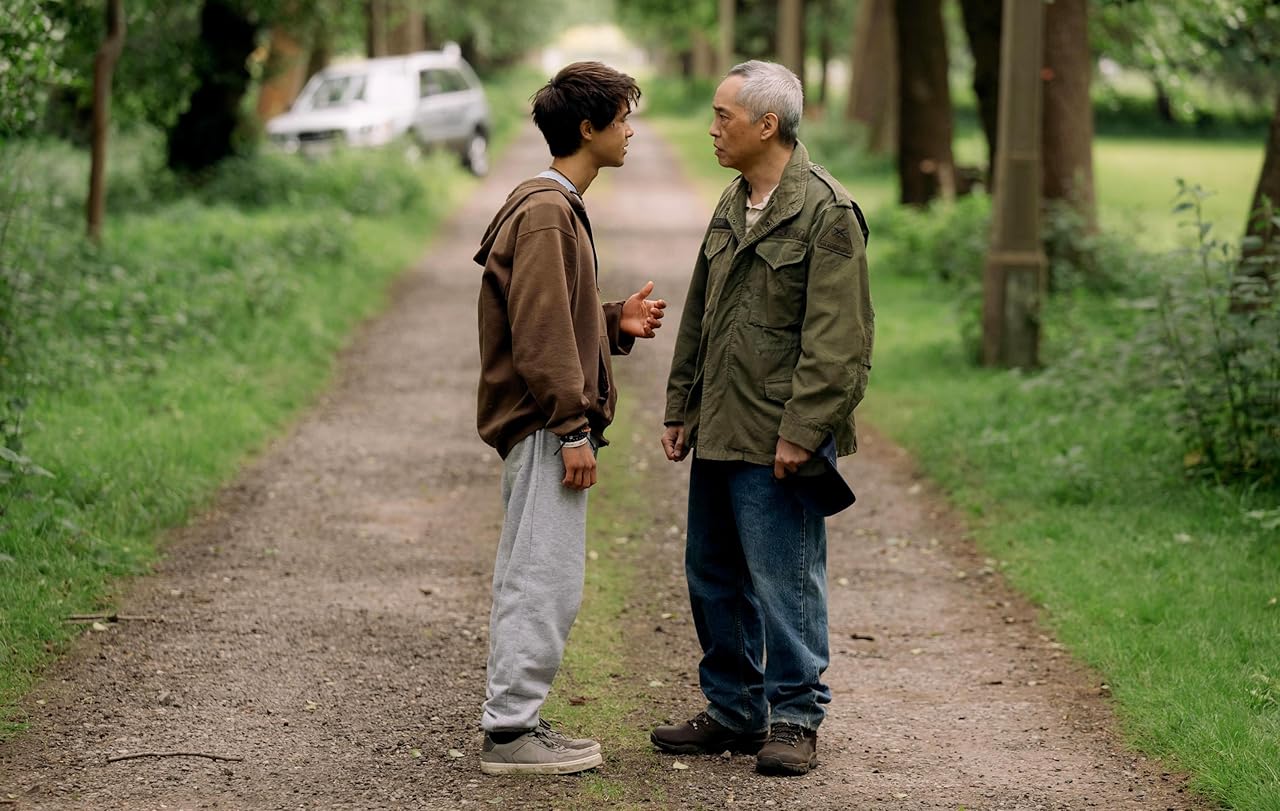
Ken Leung, playing John’s father, offers one of the film’s most poignant arcs. His restrained performance portrays a man wrestling with both grief and guilt, questioning his son’s unrelenting devotion. The quiet exchanges between father and son, presented through flashbacks and fragmented memories, offer glimpses of a fractured relationship defined by love and incomprehension.
Toby Wallace and Ciara Bravo appear as fellow missionaries Chandler and Kayla, offering brief moments of camaraderie and spiritual discussion before Chau’s fateful journey. Their presence gives context to the community that shaped his beliefs and reinforces the tension between shared faith and individual extremity.
The screenplay by Ben Ripley, adapted from Alex Perry’s Outside magazine article, is skillfully balanced between factual precision and emotional resonance. Ripley crafts dialogue that feels both intimate and restrained, avoiding judgment while illuminating the contradictions at the heart of missionary zeal. The structure alternates between present-day sequences and past reflections, mirroring the oscillation between clarity and confusion that defines Chau’s mission.
Nathan Alexander’s score deepens the atmosphere with a haunting simplicity. Rather than overwhelming the narrative, the music lingers at the edges — a faint pulse of strings and ambient tones that echo the ocean’s rhythm and the uncertainty of divine silence. Each note seems to hover between faith and futility, mirroring the fragile line Chau walks in his pursuit of spiritual connection.
Visually, the film is stunning in its restraint. The tropical setting is captured not as paradise but as an overwhelming force — untamed, indifferent, and utterly beyond human control. The dense green foliage and glimmering shoreline frame Chau as both an intruder and a supplicant, small against the immensity of nature. Oliver Bokelberg’s camera lingers on details — a trembling hand, a fading footprint in sand, the whisper of wind through leaves — transforming them into symbols of human fragility.
Editing by Dylan Highsmith provides the film with a rhythm that feels almost liturgical. Scenes of stillness are juxtaposed with brief moments of chaos, reflecting the unpredictable rhythm of faith itself. The transitions between flashbacks and the present-day narrative are seamless, often guided by sound rather than visuals, giving the film a meditative continuity.
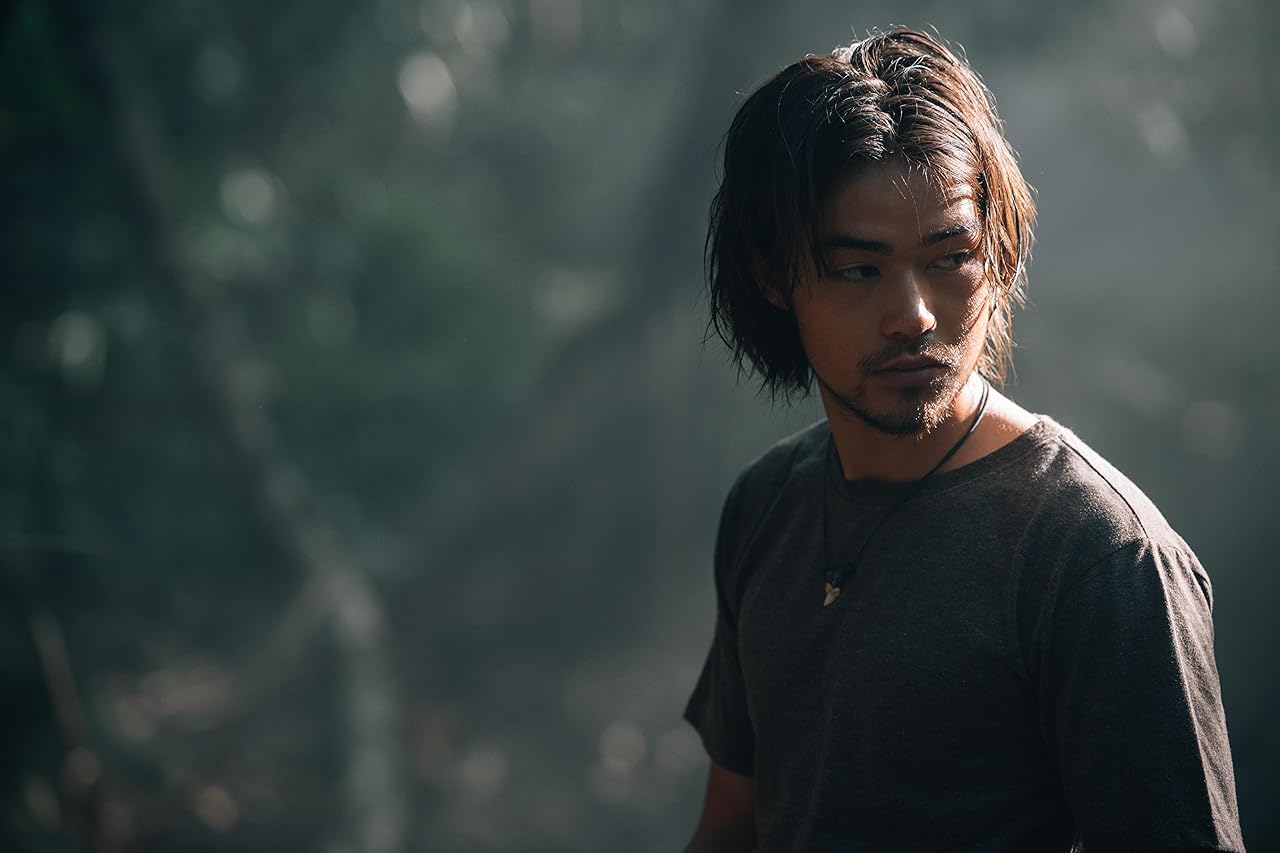
The heart of Last Days lies in its refusal to offer simple answers. It invites contemplation rather than condemnation, portraying Chau not as a saint or fool but as a deeply human figure consumed by conviction. His letters, narrated through voiceover, reveal the sincerity of a man driven by love for his faith, yet blind to the boundaries of culture and consent.
Justin Lin captures this paradox beautifully, never diminishing Chau’s courage while acknowledging the ethical implications of his choices. The film poses questions that linger long after the credits: What does it mean to follow faith to the edge of reason? How do we reconcile compassion with respect for others’ autonomy?
The supporting cast further enriches the narrative. Naveen Andrews, as Inspector Sonny, brings gravitas and moral tension to the investigation surrounding Chau’s death. His quiet frustration with bureaucratic limitations reflects a broader societal conflict between belief and law. Claire Price, portraying Chau’s mother, adds a layer of emotional tenderness to the story, representing a love that endures even when understanding fails.
The direction’s strength lies in its patience. Lin allows silence to speak louder than dialogue, often letting the camera linger on the horizon or the movement of waves. These moments of stillness emphasize isolation not just as a physical state, but as a spiritual condition. The island becomes both a place and a metaphor — a boundary between worlds, between what is known and what cannot be reached.
Throughout the film, the tension between humanity and divinity remains palpable. Chau’s journey is portrayed as both an act of devotion and defiance. His handwritten prayers, filmed in close-up, convey his unwavering faith but also his growing sense of solitude. Each entry feels like a confession, blurring the line between courage and self-destruction.
As the narrative progresses, the inevitability of his fate becomes more pronounced. The film does not dramatize the moment of his death; instead, it fades into stillness, leaving the audience suspended in ambiguity. This choice reinforces the film’s central theme — that some truths cannot be witnessed or explained, only felt in the echo of absence.

What lingers is not the tragedy itself, but the questions it raises about belief, purpose, and the human yearning for meaning. Justin Lin approaches these questions with reverence, transforming a real-life controversy into a poetic reflection on the nature of conviction. His film neither glorifies nor condemns, but listens — to faith, to silence, to the murmur of the sea around an unreachable island.
Last Days stands as one of Lin’s most introspective works, marking a departure from his action-oriented background into the realm of moral and emotional complexity. It challenges viewers to sit with discomfort, to recognize the fragile beauty of human persistence even when it leads to ruin.
By the time the final shot fades, what remains is an image of endless water stretching toward an unseen shore — a quiet reminder of the distance between intention and understanding. The film’s power lies in its restraint, in its ability to speak softly yet linger profoundly in the mind.
Through its artistry and emotional depth, Last Days transforms a story of loss into a meditation on the boundaries of faith and the resilience of the human spirit. It is a haunting, contemplative experience — one that invites empathy without illusion, and reflection without resolution.
