
Director : Josh Boone
Writer : Susan McMartin
Cast : Allison Williams, Mckenna Grace, Dave Franco, Mason Thames
Running time : 116 minutes

Regretting You is a romantic drama that attempts to blend family tragedy with emotional healing, tracing the fragile bond between a mother and daughter shattered by secrets and loss. Adapted from Colleen Hoover’s 2019 novel, the film unfolds as a tender yet turbulent journey through grief, love, and forgiveness. Director Josh Boone translates the story with a blend of visual warmth and restrained melancholy, while screenwriter Susan McMartin reshapes Hoover’s prose into a script that relies heavily on intimate moments rather than grand gestures. The result is a film that seeks to capture the messy beauty of human relationships, even as it sometimes falters in tone.
Set in the late 2000s and the present day, the story follows Morgan Grant, portrayed by Allison Williams, who once dreamed of a life filled with freedom and opportunity. Her youth is abruptly transformed when an unexpected pregnancy ties her future to her high school sweetheart, Chris. Their relationship, though built on affection, quickly becomes weighed down by the responsibilities of adulthood. The film portrays Morgan’s early years with an understated sadness, using soft lighting and nostalgic framing to emphasize what was lost rather than what was gained.

Seventeen years later, the narrative shifts to focus on Morgan’s daughter, Clara, played by Mckenna Grace. Clara is intelligent, headstrong, and yearning for independence, mirroring her mother’s younger self. The connection between the two is both deep and strained. Their relationship is defined by unspoken resentment and miscommunication, a generational rift that feels authentic and painful. Williams and Grace share a delicate chemistry that drives much of the film’s emotional tension, portraying the push and pull of love between two people who both want to be understood yet struggle to express themselves.
A devastating car accident changes everything. When Chris and Jenny—Morgan’s sister and Clara’s aunt—die suddenly, the truth of their secret affair emerges. Boone stages this revelation with quiet restraint, focusing on reaction rather than spectacle. The camera lingers on faces, letting silence speak more loudly than words. This choice emphasizes the emotional gravity of betrayal, making it feel deeply personal rather than melodramatic. For Morgan and Clara, the aftermath is not just about mourning lost loved ones but confronting the destruction of trust and the disintegration of what they believed to be their family.
Dave Franco delivers a quietly affecting performance as Jonah, Jenny’s partner and a long-time friend of Morgan. His character becomes an emotional anchor in the story, caught between guilt, grief, and a rekindled connection with Morgan. Their interactions are filled with restraint, portraying a bond that carries both comfort and discomfort. There is a tenderness in their shared sorrow, and Boone wisely allows these moments to unfold naturally, without rushing toward resolution. The subtle intimacy between the two characters serves as a reminder that healing often comes from shared vulnerability rather than romance alone.

Mason Thames as Miller, Clara’s love interest, brings youthful sincerity to his role. His chemistry with Mckenna Grace injects light into a film dominated by heavy emotional beats. Their relationship, marked by uncertainty and self-discovery, parallels Morgan’s own youthful struggles. Grace portrays Clara with conviction, navigating her character’s transformation from defiant teenager to empathetic young woman. Her performance stands as one of the film’s strongest elements, balancing rebellion with raw emotional honesty.
The screenplay leans into introspection, favoring dialogue that feels natural and lived-in. Conversations between Morgan and Clara capture the frustrations and tenderness inherent in a mother-daughter relationship under strain. McMartin’s writing allows for moments of silence and hesitation, giving the audience space to interpret emotions rather than spelling them out. While some exchanges verge on melodrama, others resonate deeply, offering glimpses into the quiet ache of disappointment and the slow rebuilding of love.

Visually, the film is bathed in soft, golden hues that evoke nostalgia and longing. Cinematographer Tim Orr uses natural light to create a sense of realism, while subtle color grading shifts reflect emotional transitions—warm tones for memories, muted palettes for grief, and delicate blues during reconciliation. The cinematography mirrors the characters’ emotional states, turning simple domestic spaces into reflections of their inner turmoil. Boone’s direction emphasizes intimacy over spectacle, using close-ups and handheld shots to bring viewers into the emotional core of each scene.
Nathaniel Walcott’s score underscores the film with gentle piano melodies and acoustic strings. His compositions are emotive yet unobtrusive, supporting rather than overwhelming the drama. The music often mirrors the rhythm of conversation and the pacing of grief, allowing emotions to build naturally. In scenes of confrontation or reconciliation, the score swells just enough to guide the audience’s empathy without dictating it. This restraint reflects a mature understanding of the story’s tone and themes.

Editing by Marc Clark and Robb Sullivan maintains a smooth flow between timelines. The film frequently alternates between past and present, revealing pieces of Morgan’s youth alongside Clara’s coming-of-age. This structure reinforces the cyclical nature of regret and forgiveness, showing how past choices echo into the future. The pacing, while deliberate, occasionally lingers too long on certain scenes, creating moments of emotional repetition. Still, the slow rhythm mirrors the gradual process of healing that defines the story.
Allison Williams delivers a performance grounded in quiet intensity. She captures the exhaustion of a woman who has spent her life sacrificing her dreams for others, only to discover betrayal at the heart of her family. Her portrayal of Morgan’s grief is neither exaggerated nor detached; it is deeply human. Williams uses silence, small gestures, and lingering glances to communicate what her character cannot bring herself to say. Her work anchors the film, giving emotional credibility even when the script falters.

Grace, on the other hand, embodies youthful volatility with precision. Clara’s pain manifests in impulsive decisions and harsh words, yet beneath her defiance lies profound vulnerability. Grace’s ability to shift between anger and tenderness gives her character dimension and depth. When Clara begins to understand her mother’s sacrifices, Grace’s performance softens, transforming rebellion into empathy. This evolution forms the emotional backbone of the film.
Dave Franco’s restrained portrayal of Jonah complements the emotional landscape. He avoids sentimentality, grounding his character in quiet sorrow. His scenes with Williams carry emotional weight, portraying two people bound by tragedy yet seeking solace in each other’s presence. Franco’s understated performance contrasts well with the intensity of the leads, providing balance to the narrative’s emotional cadence.
The film’s exploration of grief and betrayal is intimate rather than sensational. Boone avoids the temptation of overt dramatization, opting for realism rooted in human imperfection. Regretting You does not glorify pain; instead, it acknowledges it as an inevitable part of love and life. The characters’ journeys toward forgiveness are not portrayed as linear or easy. Their growth feels authentic, marked by setbacks, hesitation, and fleeting moments of understanding.
There is a thematic undercurrent about the passage of time and the persistence of regret. The narrative suggests that love can coexist with disappointment, and that forgiveness often emerges from shared suffering. The film’s title takes on layered meaning as both mother and daughter learn to accept the choices that shaped their lives. This emotional reconciliation, though understated, gives the story a sense of completion.

Visually, Boone’s direction maintains a consistent emotional tone, using quiet domestic spaces as arenas for confrontation and healing. The film’s most powerful moments are often its simplest—Morgan silently cleaning the kitchen after discovering the affair, or Clara looking through old photographs of her parents. These wordless scenes speak volumes, illustrating how ordinary actions can carry immense emotional weight.
Despite its emotional authenticity, the film struggles at times with uneven pacing and tonal consistency. Certain sequences feel overly prolonged, while others rush through significant emotional developments. The dialogue occasionally lapses into sentimentality, particularly in the later acts. Still, the sincerity of the performances prevents the film from collapsing under its own weight. Even when flawed, it remains heartfelt and genuine.
The chemistry among the cast contributes to the film’s emotional resonance. Williams and Grace create a believable mother-daughter dynamic that oscillates between tenderness and tension. Their arguments feel lived-in, their reconciliations hard-earned. Franco’s steady presence and Thames’s youthful warmth round out the ensemble, offering balance and contrast to the central relationship.
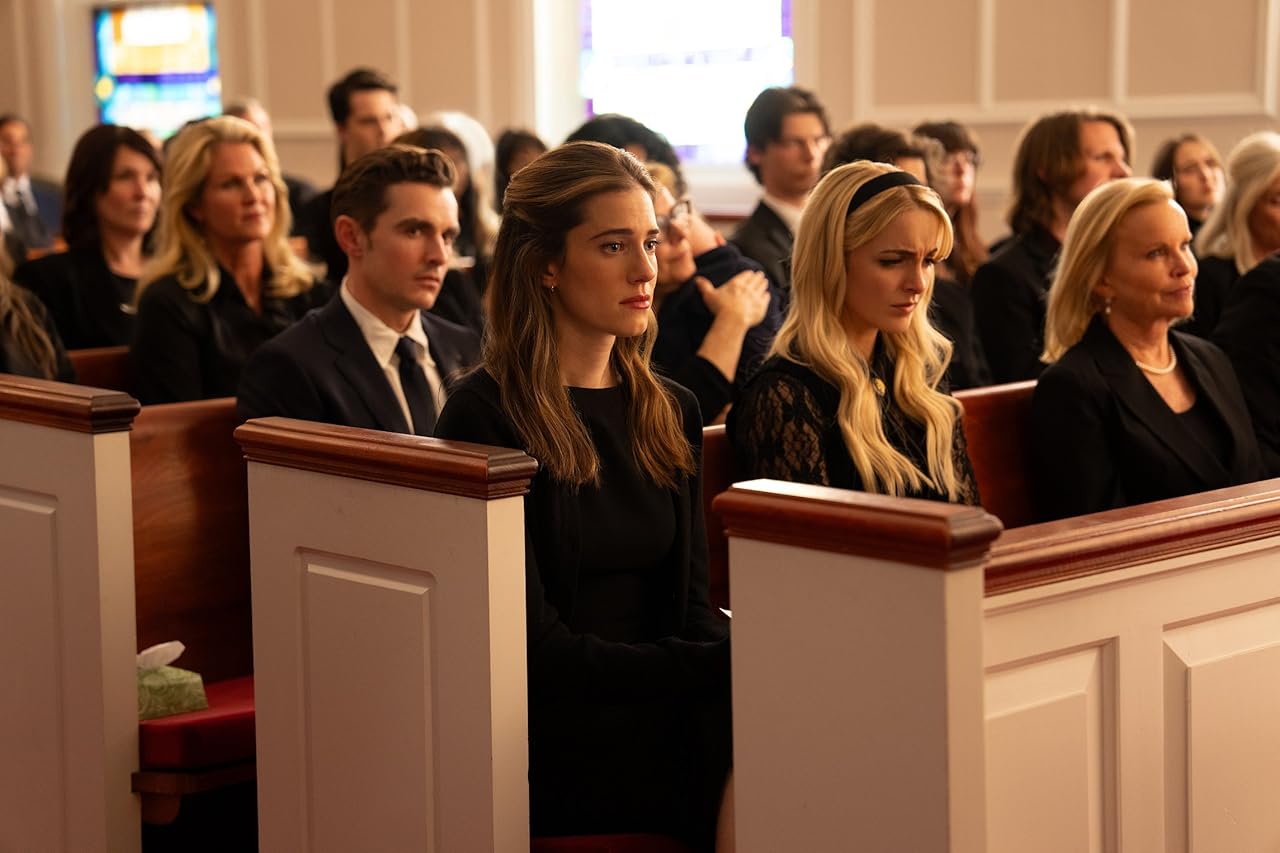
Regretting You finds its greatest strength in moments of quiet connection. Boone’s sensitivity as a director allows emotions to surface gradually, creating an experience that feels more like reflection than narrative propulsion. The film is less about dramatic twists and more about emotional endurance—how people learn to live with loss, betrayal, and lingering affection.
Though critics were unkind, describing the film as overly sentimental, there is a sincerity in its emotional approach that may resonate with audiences familiar with Hoover’s work. The story’s imperfections mirror the flaws of its characters, and in that sense, it achieves a certain honesty. The pacing, the dialogue, and even the awkward silences all reflect the messiness of real life.
In its final moments, Regretting You chooses compassion over closure. Morgan and Clara’s reconciliation is understated, framed through small gestures and tentative smiles rather than sweeping declarations. The film closes on a note of quiet hope, suggesting that love, though fractured, can always be rebuilt. It is not a tale of grand redemption but one of gentle persistence—a reminder that even in regret, there can be grace.
Regretting You is far from perfect, yet its imperfections give it heart. Through Boone’s patient direction, McMartin’s emotionally aware script, and the committed performances of its cast, the film captures the ache of loss and the fragile beauty of healing. It stands as a reflection on love’s complexity, where forgiveness is not a resolution but a continual act of courage. In its quietest moments, it offers something rare: a tender, imperfect truth about what it means to move forward when everything once certain has been lost.